Supply line and appliance leaks
Dishwasher, refrigerator, and washing machine leaks spread under floors and into cabinets. Early extraction helps limit swelling and delamination.
Serving Durham, North Carolina & surrounding areas
24/7 Emergency Response
Water extraction · Durham, NC
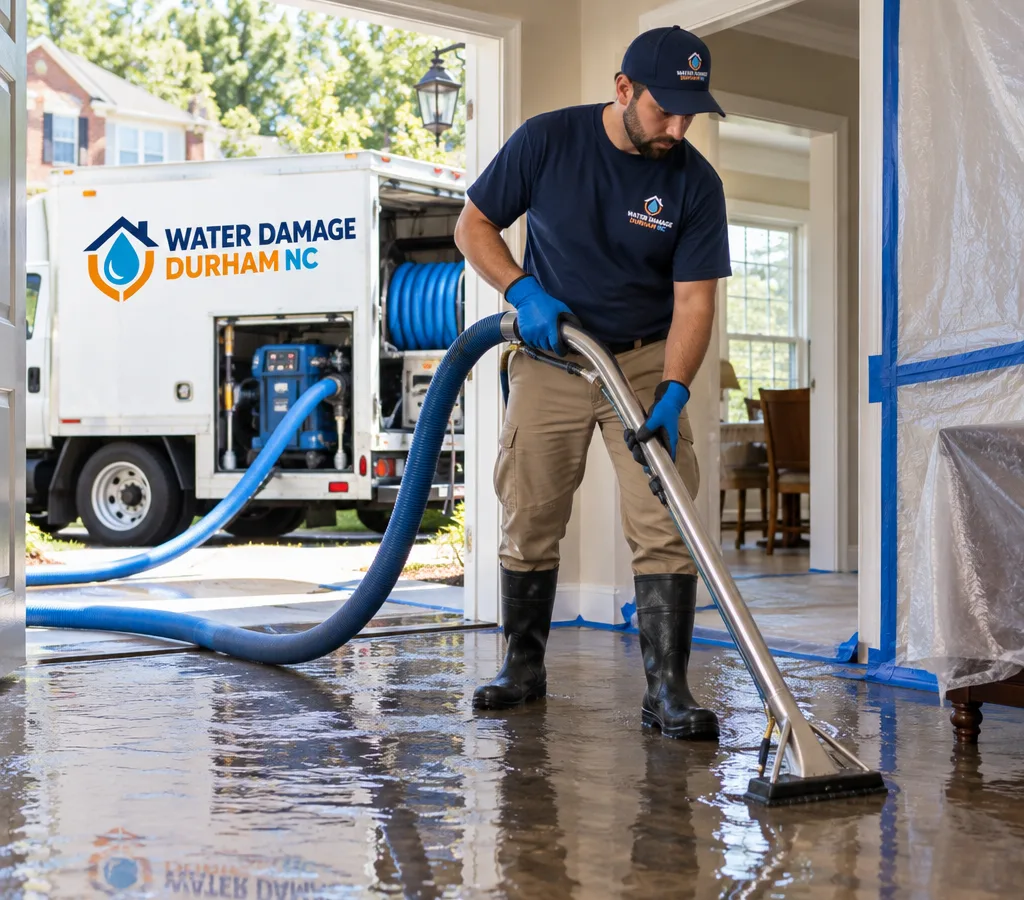
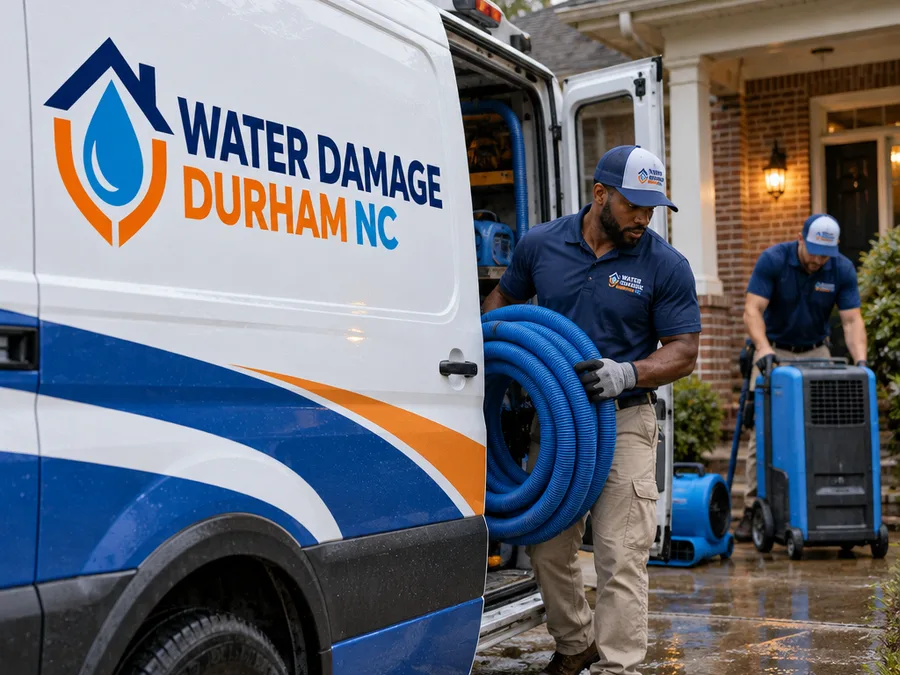
Fast water removal and targeted drying to help limit damage after a leak, burst pipe, or flooding. We arrive with commercial pumps, wet vacs, and moisture meters so you get a clear plan before the work starts.
Remove water before damage spreads
When water is left sitting, it keeps wicking into drywall, baseboards, cabinets, and subflooring. Water extraction is the step that buys you time: removing as much bulk water as possible so drying equipment can do its job.
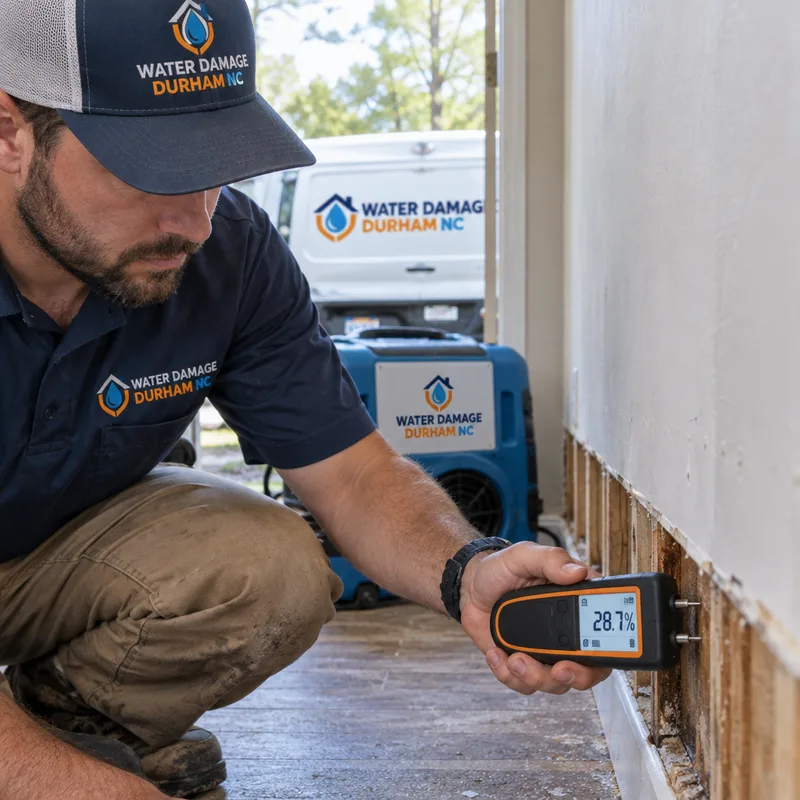
If you are searching for water extraction Durham homeowners can rely on, focus on three things right away: how quickly a crew can start removing standing water, whether they measure moisture—not just “dry to the touch”—and whether they can explain what needs to be pulled, detached, or opened up to dry correctly.
At Water Damage Durham NC, our team is water damage specialists serving Durham, and we treat extraction as a controlled trade process, not a quick vacuum-and-leave. The goal is to reduce moisture load fast, document what we find, and set up drying so materials have a real chance of recovery.
Extraction, access, and drying
Water extraction is more than removing puddles. A proper job usually includes:
Durham homes often mix older building materials with newer renovations, so we tailor the approach. Hardwood, plaster, and layered subfloors all respond differently than modern drywall and LVP. The extraction plan should match what your house is actually built with.
Water losses we handle
Dishwasher, refrigerator, and washing machine leaks spread under floors and into cabinets. Early extraction helps limit swelling and delamination.
Hidden leaks can saturate drywall and insulation before you see staining. We moisture-map the area so drying is aimed where it counts.
When water is contaminated, the scope changes: extraction plus controlled removal and cleaning steps to protect indoor air quality.
Wind-driven rain at doors, windows, or roof lines can soak framing and sheathing. Extraction reduces surface water while we identify pathways.
Standing water under a home needs pumping, humidity control, and careful monitoring. Drying plans must account for airflow and vapor barriers.
From assessment to dry verification
Step 1 of 5
We walk the affected areas, check for safety concerns, and measure moisture so we can define the wet footprint. You get a straightforward explanation of what is wet, what is likely salvageable, and what needs to come out.
Step 2 of 5
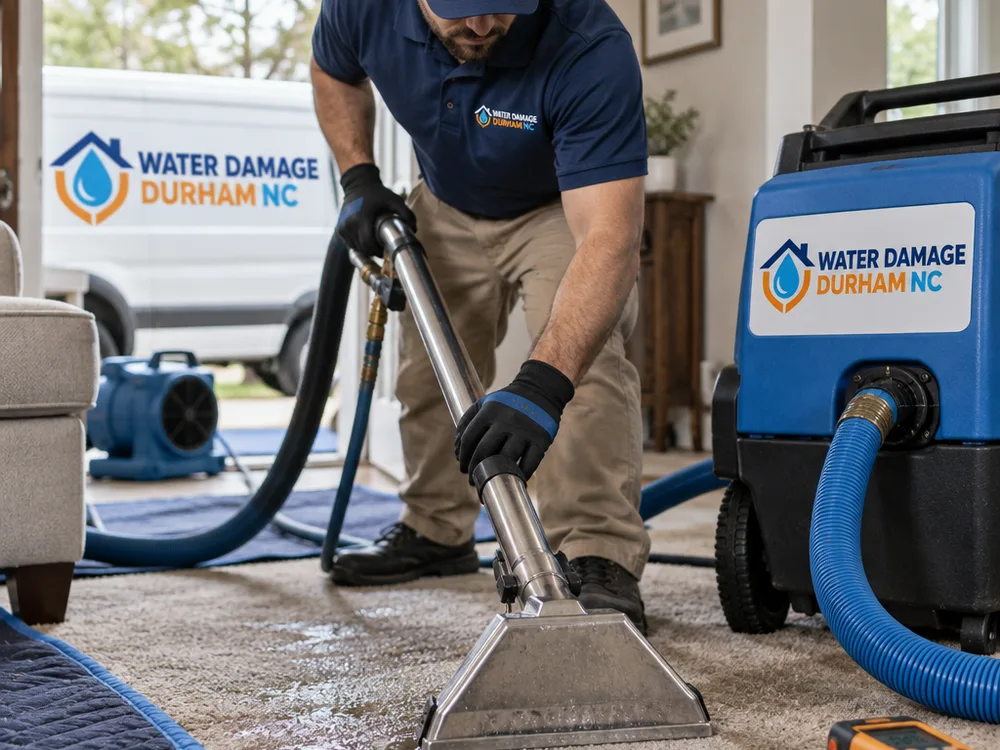
We remove standing water using pumps and professional extraction tools, then set up containment as needed to keep traffic paths clean and prevent cross-contamination.
Step 3 of 5
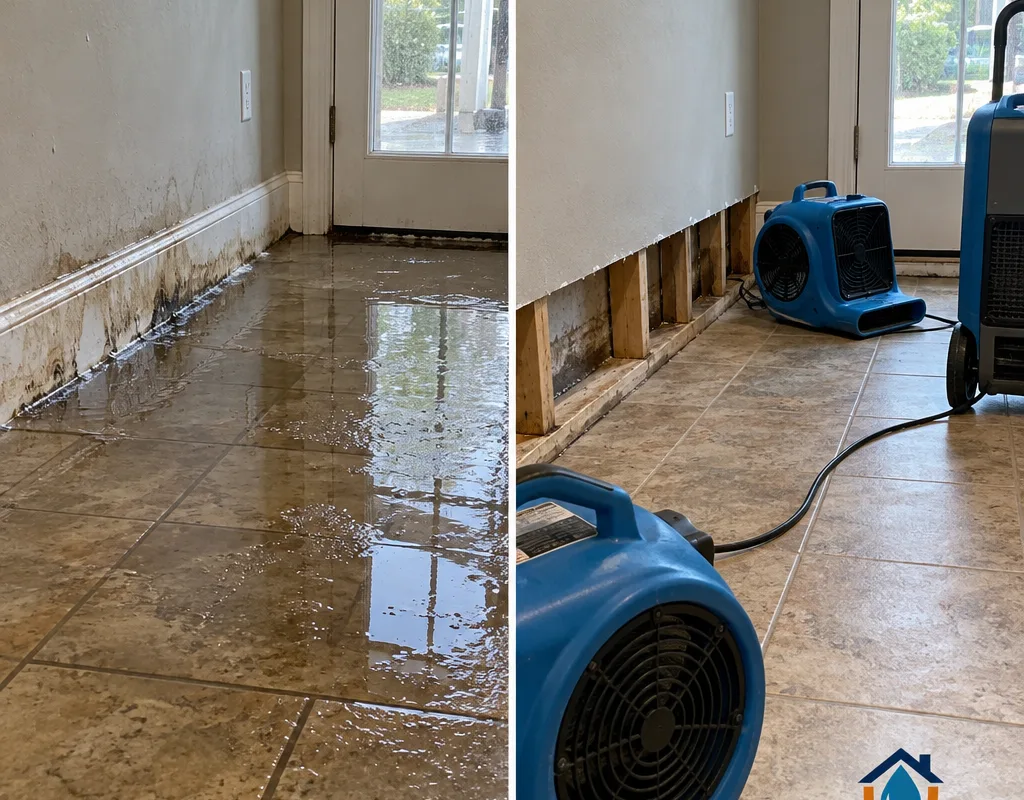
If drying will stall without access, we open the system in targeted ways: pulling baseboards, releasing carpet from tack strips, or opening toe-kicks. We avoid unnecessary demo, but we do not trap moisture behind finished surfaces.
Step 4 of 5
We place air movers and dehumidifiers based on the room size, materials, and readings. We revisit to re-check moisture and adjust equipment placement so drying continues moving toward normal levels.
Step 5 of 5
When readings show the structure has returned to an acceptable dry standard for the materials present, we remove equipment and outline the next steps. If you also need help planning rebuild, our water damage repair work can take it from dried-out to put-back-together.
Local structures and humidity
Water behaves differently depending on the structure and where it is located. In and around downtown Durham, including areas near N Mangum St, mixed-use buildings and older homes can hide moisture in layered assemblies: original plank subfloors under newer flooring, older plaster walls patched with drywall, or multiple ceiling layers. Those assemblies often need more careful moisture mapping, and drying can take longer if moisture is trapped between layers.
Homes around established neighborhoods like Trinity Park and Old North Durham can have older trim details and hardwood that benefit from fast extraction and controlled drying to reduce cupping. In newer subdivisions around Southpoint, open floor plans and large conditioned spaces can require more dehumidification capacity to keep indoor humidity down while wet materials dry.
Weather matters too. Durham’s humid conditions can slow evaporation, especially in summer. That is why extraction and dehumidification go together: removing the water you can see, then pulling moisture out of the air so water inside materials can migrate out instead of lingering.
Planning the extraction scope
Water extraction in Durham typically ranges from about $300 to $1,500 for a small to mid-size affected area with basic pumping or wet-vac removal and initial drying setup. Larger losses—multiple rooms, saturated carpet and pad, or a basement or crawlspace with standing water—often run $1,500 to $4,500+ depending on access, equipment needs, and monitoring visits.
Your final price depends on the amount of standing water, how far it traveled into materials, contamination level—clean versus gray or black water—and whether carpet, padding, or drywall needs selective removal for access. Exact scope and cost are confirmed after an on-site inspection and moisture readings.
Equipment placement and verification
Straight answers
Extraction should start as soon as it is safe to enter the area and the water source is controlled, because water continues to wick into building materials the longer it sits. In Durham’s humid conditions, fast extraction also helps keep indoor humidity from spiking and slowing the drying process.
Sometimes, yes, but only if moisture readings show the water stayed superficial and the materials can dry from the exposed side. If water has migrated under floors, into insulation, or behind baseboards, selective removal or opening is often required to dry the assembly and avoid trapping moisture.
Many residential drying jobs take about 3 to 5 days, but timing depends on what got wet, how much water was absorbed, and indoor humidity. The reliable way to know is with moisture measurements over multiple checks, not the feel of the surface.
Clean water—Category 1—comes from a sanitary source like a supply line, while contaminated water—Category 2 or 3—includes overflows, backups, or outdoor flooding and requires stricter handling. For contaminated water, the scope often includes controlled removal of affected porous materials and cleaning steps along with extraction and drying.
Yes, we can document moisture readings, affected materials, and the drying setup so the scope is clear for claim review. Coverage depends on your policy and cause of loss, but good documentation helps avoid confusion about what was necessary and why.
Shut off the water source if it is safe, avoid using electrical outlets in wet areas, and move small items off wet floors if you can do it safely. Do not run household fans into suspected contaminated water, and avoid pulling up flooring or cutting drywall unless you are sure you will not hit wiring or plumbing.
Start removal and drying
Tell us what happened and where the water is. We will confirm next steps, arrive with the right equipment, and give you a clear extraction and drying plan based on moisture readings.